
Trekking for Mental Health: How Trekking Improves Your Mental Well-Being

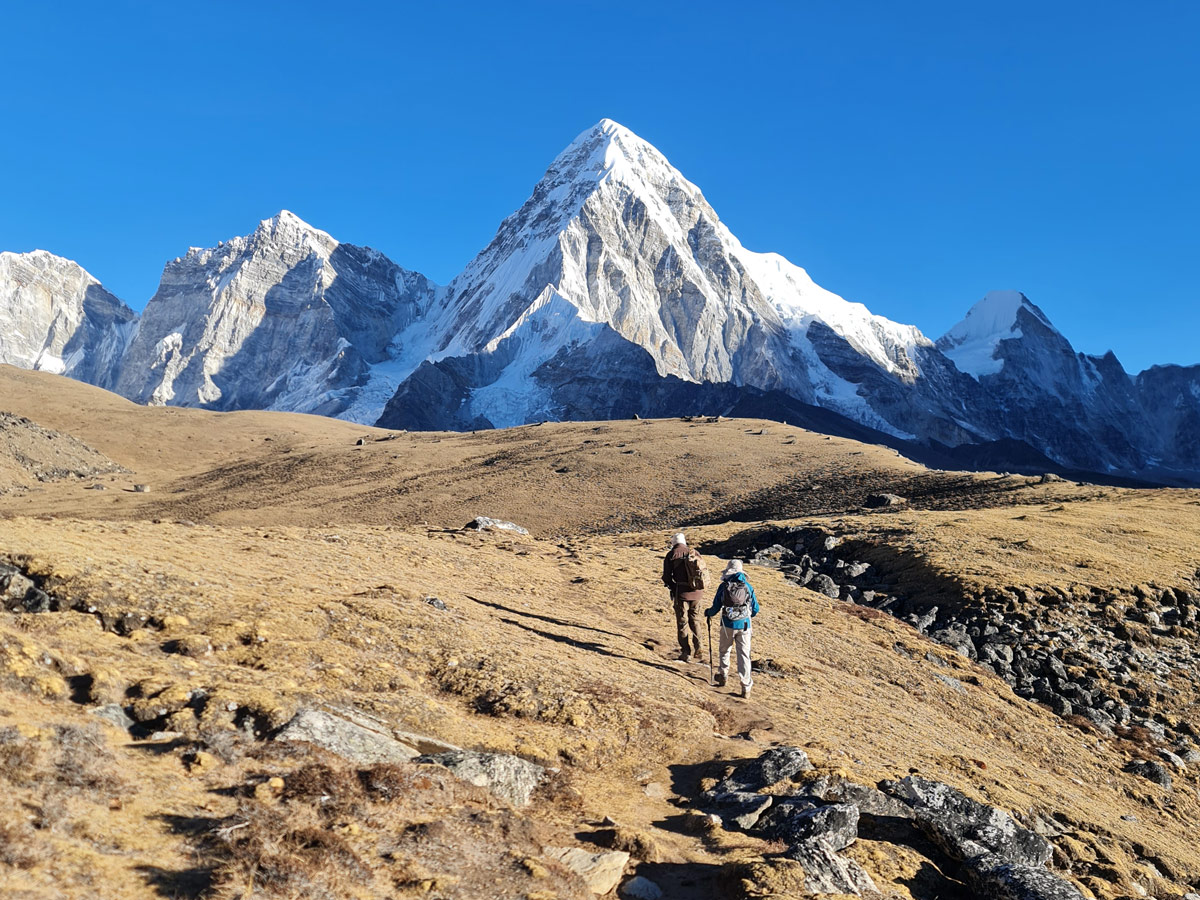
The Himalayas are famous for being everything starting from mighty, majestic, gorgeous, and pleasing to the eyes. They indeed are all of this, but they are also something more.
The mystical Himalayas possess a unique healing power that can help you find your calm. Ever felt like the processor of your brain is lagging because you have 50 browser tabs open with constant pop-ups in the form of each stress that you get?
The feeling that despite being constantly connected, you are not really connected to yourself? Worry not, you’re not alone. And trekking in the Himalayas can help you get a total system reboot.
Trekking in Nepal is about more than just getting a perfect view. It can be a very therapeutic journey. Therefore, in this blog we have covered how trekking for mental health improves your overall well-being and helps you hit that mental refresh button.
The Science Behind Trekking for Mental Health
First and foremost, let’s quickly cover the scientific relevance behind this claim. Is there any scientific basis that proves that trekking improves your mental health? Well, there is, and you don’t have to be a neuroscientist to understand that.
Often regarded as the ‘Green Exercise’ by scientists, trekking is a combination of movement, fresh air, and nature exposure that triggers certain changes in your brain chemistry.
To begin with, cortisol, i.e. the stress hormone that causes you to panic when you see a work email at 9 PM, goes down as you spend time in nature and you start feeling calmer.
Ever had a sugar rush? Trekking gives you the same rush by releasing endorphins and dopamine as you hike. These are the natural feel good chemicals released by your brain which keeps you happy and motivated.
To top it off, the sunlight exposure causes your serotonin levels to rise which helps to regulate your mood and keep it steady. That means better sleep, a brighter outlook, and a renewed sense of purpose.
Think of trekking as moving meditation. This constant movement in nature with stunning panoramas makes your brain feel at peace and even can help with memory, focus, and problem solving skills.
Key Trekking for Mental Health Benefits
Stress Reduction and Emotional Reset
Let’s face it, in today’s world of constant connectivity, hustle, and bustle, you never really have a minute to yourself without any stress running in the back of your head. Stress is almost like glitter, you think you’ve gotten rid of it but its always there.
Trekking in remote corners of Nepal means a complete change of scenery, lifestyle, and the pace of your life. Although you are constantly moving, it almost feels like your life has slowed down and you finally have a minute to yourself.
This gives you enough time and space to detangle from your problems and figure out your emotions. It is like a breather for your brain that has been working overtime all this while.
Mood Enhancement and Combating Depression
Why go for getting drunk or high or experiencing a sugar rush when you can get it naturally? Trust us, the cocktail of endorphins that you get after trekking for a while is so much better than the martini you would have had some night.
Just imagine, you wake up with a sour mood and then as you step out of the teahouse, you are standing among the tall mountains at the Annapurna Base Camp. Choosing the right season also matters, and knowing the best time to trek Annapurna Base Camp can greatly enhance this experience. Won’t that elevate your mood instantly?
To top it off, you will be accompanied by the picturesque views, delicious Nepali cuisine, and warm and welcoming locals. What else do you need for a perfect brain spa? It can significantly reduce any symptoms of depression that you might be facing.
Boosting Self-Esteem and Confidence
When living your daily life, you might often find yourself enclosed within a shell. Going to the same places, interacting with the same people, and not daring to explore beyond a set schedule.
This can often lead to a decline in your self-esteem and confidence. One minute you are walking in to an interview with all the confidence and cut to 5 years later, you might be struggling to give a presentation at an office meeting, or even to make new friends.
Trekking solves this issue for most people as you will be going to a country with completely different culture and new people. Nobody knows you and what happens here, stays here. This causes many people to come out of their shells.
You make friendships that will last you a lifetime. You will help others and you will also ask for help when required. All the hesitation disappears once you go through the challenging trek together.
Also, nothing boosts your confidence like reaching a viewpoint like the Thorong La Pass or Kalapathhar, which you thought was impossible an hour ago. You prove to yourself that you can push limits, and that sense of achievement sticks with you long after the trek ends.
Cognitive Benefits
Ever felt stuck in your work desk because you are literally staring at the same screen everyday and you feel like your creativity has gone for a toss? Or a bad case of writer’s block?
Nothing boosts your creativity like a long hike up in the Himalayas. Not just creativity, but trekking can enhance your other cognitive traits like clarity and focus too.
How so? Well, trekking often tends to shake your brain out of the monotonous routine. Your schedule changes and so does the amount of physical activity. This automatically makes your brain more productive.
Somewhere between landing in Kathmandu to exploring the teahouses in Annapurna region, you start untangling your thoughts and putting a brand new painting on your canvas, or creating a new poem along the way.
Social Connection and Sense of Belonging
While trekking can be a solo journey to find your inner self, it can also be the place where you find new people and build camaraderie that lasts you for lifetime.
And here we are not talking about that awkward small talk that you have at one of the house parties. When you share the highs and lows that come with trekking, you build real connections.
You will be sharing trail snacks, laugh over wrong turns, help each other cross a wobbly suspension bridge, or support each other in case of medical emergencies. You’ll also be sharing your life stories with each other.
In the small tea houses of Nepal, strangers become trekking buddies, trekking buddies become friends, and friends become…well, people you’ll probably send way too many trail photos to later and maybe even plan another trek together. This teahouse culture is a defining part of teahouse trekking in Nepal.
Mindfulness and Living in the Present
Ever felt like you are just sitting idly and the world is just passing you by? Almost like zoning out in between an important lecture and not being able to snap out of it no matter how much you try?
This happens due to lack of mindfulness where your brain is not able to focus or is focusing on many things at the same time. If you are someone who has issues with brain working on hundreds of things every time without actually focusing on the present, trekking can be a huge relief for you.
Although you are always on the go, trekking teaches you to live in the moment naturally as you feel the wind on your face, hear distant yak bells, and notice the crunch of gravel underfoot.
Digital Detox
Okay, time to be honest. How much time can you actually go without glancing at your phone as you check for some important notifications? Or even for doomscrolling on Instagram?
Now while this might seem a normal schedule for us, it is actually a recipe for mental fatigue. You are exposing your brain to overstimulation and reduced attention span. Trekking can be the perfect intervention for you.
When you are on the trail, the signal is basically non existent or spotty at best which forces you for a digital detox, no matter how much you want to scroll, you can’t.
You will be cloud scrolling instead of doomscrolling. Now isn’t that the perfect replacement? Except when you are on Everest Base Camp Trek where you get a normal Wi-Fi connection. If you are comparing routes, understanding the differences between Everest vs Annapurna Base Camp can also help you decide what kind of experience suits you best. But even then the range is not very strong and you need to pay extra bucks for it.
Finding Perspective
Lastly, and most importantly, you will gain a complete shift of perspective when you go for trekking. Before trekking, your life will seem full of problems and you will also be questioning your life choices.
Even during trekking, you will be tired and your entire body will be in pain. Huffing and puffing up a steep hill, you will even be questioning your decision of going for trekking.
But once you reach the top of that mountain pass, you will have a moment of realization that you overcame the physical challenge and that achievement will cause a shift of perspective. Moments like these are often highlighted among the many reasons for trekking in Nepal.
Then, when you stand between these tall Himalayas, your life problems start seeming too small. Your difficult job, that annoying email, the leaky tap in the washroom, all fade away against the sheer, humbling scale of the Himalayas.
You realize that you’re a small part of a vast, beautiful world, and your problems are simply challenges to be conquered, just like that last uphill climb that you were struggling to finish but did it at the end.
Nepal as a Trekking for Mental Health Destination
Trekking for mental health works fine everywhere. So, why specifically the Himalayas of Nepal? Now that covered the benefits of trekking and how it improves your mental health, lets explore why Nepal can be the best destination for you.
But what makes Nepal special is mainly the variety that offers. Whether you are a seasoned trekker looking to take the challenge up a notch or you are a beginner looking to test the waters, Nepal has the perfect trekking trail for everyone.
From the Ghorepani Poonhill Trek for beginners with basic fitness level to the Everest Base Camp and Gokyo Lakes Trek for people with good physical fitness, Nepal has it all. For first-timers, learning more about trekking in Nepal for beginners can make the journey smoother and more enjoyable.
Also, trekking in Nepal transcends into an art form without even you realizing it. You will be surrounded with exotic flora and fauna as most of the treks in Nepal are situated within the protected areas of Nepal.
Besides that, the locals will make your experience even better by including you in the various rituals, traditions, and festivities that take place in Nepal. The locals here are so welcoming that you won’t feel out of place even for a second.
Trekking Tips for Maximum Mental Health Benefits
- Instead of just rushing to reach the end point, try to embrace each step along the way which will help you stay aware of your surroundings and improve your mindfulness.
- When you are on the trek, you will not be able to access much of your gadgets due to low battery or low signal. So, it is better to not carry much gadgets at all. Make airplane mode your new best friend during the trek.
- Don’t just walk around, try to engage all your senses during the trek. Touch the mani walls, listen to the fluttering prayer flags, and smell the different flowers on the trek.
- Try to take constant breaks in between walking. This way, you can enjoy nature around you and also anchor your thoughts. The rest you get is another plus point.
- If you have trouble detangling your thoughts, try to maintain a trail journal. This will work wonders to process your thoughts and eventually detangle them too.
- When trekking, you need to set a goal that goes beyond just reaching your destination. It could be anything like to be more patient, to let go of a worry, or to feel gratitude.
- Try to walk at your own pace without constantly comparing yourself to others on the trail. This helps reduce pressure and allows you to enjoy the experience fully.
- Stay hydrated and nourish your body properly during the trek, as physical well-being plays a crucial role in maintaining mental balance.
- Allow yourself to disconnect mentally from expectations and outcomes, and simply accept each day on the trail as it comes.
Frequently Asked Questions (FAQs)
1. Can trekking really improve mental health?
Yes, trekking can significantly improve mental health by reducing stress, improving mood, and helping you disconnect from daily pressures. Physical movement combined with nature exposure helps calm the mind and reset emotional balance.
2. Do I need to be physically fit to experience mental health benefits from trekking?
No, you do not need to be extremely fit. Even moderate trekking routes can provide mental health benefits as long as you move at a comfortable pace and allow yourself to enjoy the surroundings.
3. Is trekking suitable for people dealing with stress or burnout?
Yes, trekking is especially helpful for people experiencing stress or burnout. Being away from routine, screens, and constant demands allows the mind to slow down and recover naturally.
4. Can solo trekking help with mental clarity?
Solo trekking can be very effective for mental clarity as it allows uninterrupted time for self-reflection. However, group trekking also provides emotional support and a sense of belonging, which can be equally beneficial.
5. How long does it take to feel the mental health benefits of trekking?
Many people begin to feel calmer and more present within the first few days of trekking. Deeper mental clarity and perspective often develop as the journey progresses and daily distractions fade away.